You rarely think about your plumbing until something goes wrong. One moment, you are washing dishes; the next, dirty water is gurgling up in your bathtub. Sewer line failure is a homeowner’s nightmare. It’s messy, smelly, and often expensive. However, for residents of the Pikes Peak region, the risk is even higher. We live in a beautiful area, but our unique environment creates a “perfect storm” for underground pipes. Between shifting clay soils, aggressive tree roots, and dramatic freeze-thaw cycles, your sewer line faces constant pressure. Ignoring the health of this critical infrastructure can lead to catastrophic damage.
Table of contents
Estimated reading time: 6 minutes
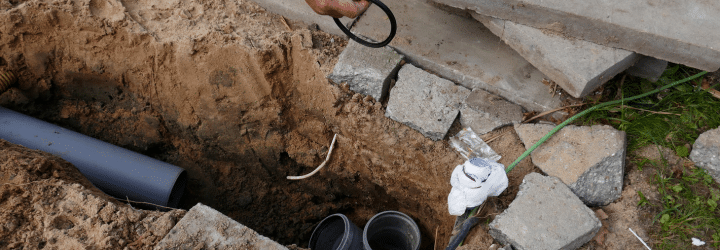
Pipes Breaking
Standard wear and tear affects every home eventually. However, professionals see specific patterns of damage driven by our local geography, see below:
The Bentonite Clay Problem
Colorado Springs is known for expansive bentonite clay soils. This soil isn’t a constant thing; it expands dramatically when it’s moist and contracts when it’s dry. This movement puts tremendous stress on sewer lines. Eventually, the soil movement can make pipes sag (belly), crack, or even shear off completely. If you live in an area that rests on this moving soil, your sewer is experiencing constant mechanical stress.
The Freeze-Thaw Cycle
Colorado weather can be unpredictable. One day we will have snow, and the next day we will have 60-degree weather. This temperature fluctuation makes the ground expand and contract. When the ground thaws in the spring or partially during winter, it moves, and this can cause your sewer line to shift, particularly if you have an older, more brittle line composed of clay or Orangeburg (tar paper).
Mature Trees and Root Intrusion
Preventing root growth in mature trees is not feasible. If you live in one of Colorado Springs’ historic districts, such as the Old North End, you have gorgeous old-growth trees shading your streets. Yes, they increase your property value, but yes, their roots are vicious. Tree roots are attracted to moisture. If there’s a crack in a sewer pipe, water vapor is present. The roots find their way to the crack and then grow into it, thereby making the crack larger. It then filters out toilet paper and other waste, creating a blockage.
Warning Signs to Look Out For
Fortunately, sewer lines often show warning signs of potential problems if you know what to watch and sniff out. You may be able to dodge a major crisis if you can recognize these issues early on.
1. The Nose Knows
Your sewer system should be airtight. The only place sewer gas should escape is through the vent stack on your roof. A rotten egg or sewer gas odor in your basement, yard, or around your drains indicates that you have a leak somewhere. The smell means that gas is escaping through a hole in the pipe. This is a serious health concern, and you should call a pro right away.
2. Sluggish Water Flow and Gurgling Noises
If only one sink is running slowly, you probably have a clog. If two or more are running slowly at the same time, you have a system-wide problem. Make sure you check your lowest drains, such as basement shower drains, floor drains, etc. If you flush the toilet and you hear a gurgle in the shower, it is air in the line trying to escape.
3.”Lush Patch” Phenomenon
Now, step outside and take a glance around your yard. Is there an area of the lawn that looks a bit greener, a little taller, or more dense than the rest?
It may look pretty, but that’s not a good thing. That section of grass is probably getting its nutrients from the leaking sewer, which is a super fertilizer. Alternatively, you may see a spot that is perpetually wet or even a depression in the ground, even though it hasn’t rained. That’s a sign that there’s a leak that’s keeping the ground wet, which could eventually develop into a sinkhole.
Professional Inspection vs DIY
The natural response, when you have a backup, is to reach for a chemical drain cleaner or to get a snake at a hardware store. Sure, a store-bought snake can clear a clog by poking a hole through it, but that is just a band-aid. It can’t take out tree roots, and it definitely won’t repair a pipe that has collapsed.
The Power of the Camera
At Spotted Dog Excavating, we don’t guess. We use video camera sewer scopes. We push a high-definition camera into your line to see exactly what is going on underground. That is a necessary diagnostic phase. You have to determine if it’s a clog, roots, or something structurally wrong. Otherwise, you are guessing. If you are purchasing a home in Colorado Springs, and especially if the home was built prior to 1980, a sewer scope inspection is a must.
Which Method To Use?
So what if you have damage? Well, there are some solutions. Historically, a sewer line repair would involve calling in a backhoe and digging up your yard, driveway, and landscaping.
Pipe Lining: A resin-saturated liner is placed into the existing pipe, and then allowed to cure to form a “new” pipe inside the old. The results are smooth, long-lasting, and completely root-proof! And more importantly, you save the trees and your driveway.
How to Prevent and Maintain
Taking care of what you put down the sewer line can help extend the life of your sewer line.
Items to Avoid Flushing
Remember that the toilet is a disposal device and not a wastebasket. Do not flush:
- “Flushable” wipes (they do not break down)
- Feminine hygiene products
- Paper towels
- Cat litter
- Grease or cooking oil (this solidifies in cold pipes like glue)
Resource: facilitymanagement.com
Routine Maintenance
If you have mature trees close to the sewer line, it’s a good idea to have the line professionally cleaned and hydro-jetted every 18-24 months. This way, you can stay on top of the root problem before it completely destroys the line. A monthly application of an enzyme-based drain cleaner, which consumes any organic matter, can also be beneficial, without the caustic chemicals that erode your pipes.
Resource: dgsd.org
Final Thoughts
Sewer line problems rarely fix themselves. What starts as a faint odor, a slow drain, or a slightly greener patch of grass can quickly turn into a major excavation and an unexpected expense. In Colorado Springs, shifting bentonite clay, freeze-thaw cycles, and deep tree roots place constant pressure on underground pipes. If you have noticed warning signs, contact Spotted Dog Excavating to schedule an inspection.